
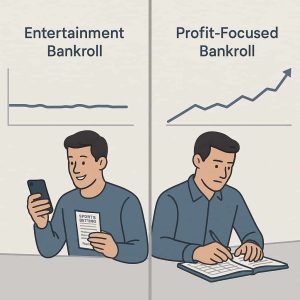
 Bankroll management sounds technical, but the idea is simple. It’s about deciding how much money you’re willing to bet and how you use it over time. The difference between casual and serious bettors isn’t just how often they wager, it’s how they treat their bankroll and what they expect from it. Some bettors see gambling as entertainment, others treat it as a long-term effort to make money, and many fall somewhere in between. Each approach requires a different bankroll strategy, whether you’re placing the occasional wager through a platform like 4play Bet or tracking results more deliberately over time. Using the wrong approach is a fast way to burn cash or ruin the experience.
Entertainment Bankrolls
An entertainment bankroll is money set aside purely for fun. Think of it like a night out, a concert ticket, or a streaming subscription. Once it’s spent, it’s gone, and that’s expected.
Casual bettors usually fall into this group. They might place bets during big games, playoffs, or weekends with friends. Winning is nice, but it’s not the primary goal. The goal is enjoyment.
With an entertainment bankroll, the most crucial rule is separation. This money should never be mixed with rent, bills, or savings. It should be an amount you’re entirely comfortable losing. If losing the bankroll would cause stress, it’s too big.
Bet sizing can be loose, but still needs limits. Many casual bettors make the mistake of chasing losses. They double their bet after a stormy night, hoping to get back to even. That turns a fun activity into a stressful one in a hurry.
A better approach is flat betting. Pick a small, fixed amount per bet and stick to it. Whether you win or lose doesn’t change the size of the next wager. This keeps the bankroll alive longer and protects the fun.
Entertainment bankrolls don’t need detailed tracking or complex systems. But basic awareness helps. Know how much you started with. Know when you’re done. And don’t reload the bankroll emotionally after a bad run.
Profit-Focused Bankrolls
A profit-focused bankroll is different. This money is treated as working capital. The goal isn’t excitement. It’s long-term growth.
Serious bettors think in terms of edges, probabilities, and volume. They know losing streaks are part of the process. Bankroll management is what keeps them in the game long enough for their edge to matter.
With a profit-focused bankroll, discipline matters more than confidence. Most serious bettors use unit-based betting. A unit is a small percentage of the total bankroll, often 1% or less. Every wager is measured in units, not dollars.
This approach does two things. First, it controls risk. No single bet can wreck the bankroll. Second, it creates consistency. Wins and losses are judged by decision quality, not short-term results.
Serious bettors also track everything. Bets, odds, stake size, and results. Not because it’s fun, but because data shows what’s working and what isn’t. Without tracking, it’s easy to overestimate skill and underestimate variance.
Chasing losses is especially dangerous here. Increasing bet size out of frustration breaks the system. A profit-focused bankroll only works if rules are followed, even when things go badly.
This type of bankroll also requires realistic expectations. Even skilled bettors have long downswings. Bankroll management isn’t about avoiding losses. It’s about surviving them.
The Hybrid Approach
Many bettors don’t fit neatly into one category. They enjoy betting, but they also care about winning. They want entertainment, but they don’t want to donate money either. That’s where a hybrid approach makes sense.
A hybrid bankroll blends structure with flexibility. The bettor still sets aside a dedicated amount and uses unit sizing, but the pressure to perform is lower than with a purely profit-driven model.
In this setup, bankroll size is often smaller than a serious bettor’s, but it is managed more carefully than a casual bettor’s. Bets might range from 1 to 2 units, with occasional larger plays reserved for high-confidence spots.
Tracking exists, but it’s lighter. The goal isn’t to build a professional-grade database. It’s to stay honest about results and avoid emotional decisions.
The hybrid approach also allows for planned “fun bets.” Parlays, long shots, or novelty wagers can be carved out as a small portion of the bankroll. This keeps enjoyment high without risking the core funds.
The key is clarity. Hybrid bettors fail when they switch mindsets mid-session. If a bet loses, it shouldn’t suddenly become personal. Structure still matters, even when the goal includes fun.
Choosing the Right Strategy
The right bankroll strategy depends on why you bet. Not what you tell yourself, but what your behavior shows.
If you rarely track bets and mostly wager during significant events, an entertainment bankroll makes sense. If you spend time line shopping, tracking results, and studying markets, you need a profit-focused system. If you do both, hybrid management is likely the best fit.
Problems start when expectations and strategy don’t match. Treating entertainment money like an investment leads to frustration. Treating a profit bankroll like play money leads to ruin.
Good bankroll management doesn’t guarantee success. But bad bankroll management almost guarantees failure. Decide what kind of bettor you are. Then manage your money in a way that supports that choice.